
Sustainable Tamarind Husk Powder
Value-added tamarind husk powder for industrial, agricultural, and specialty ingredient buyers from Bastar.
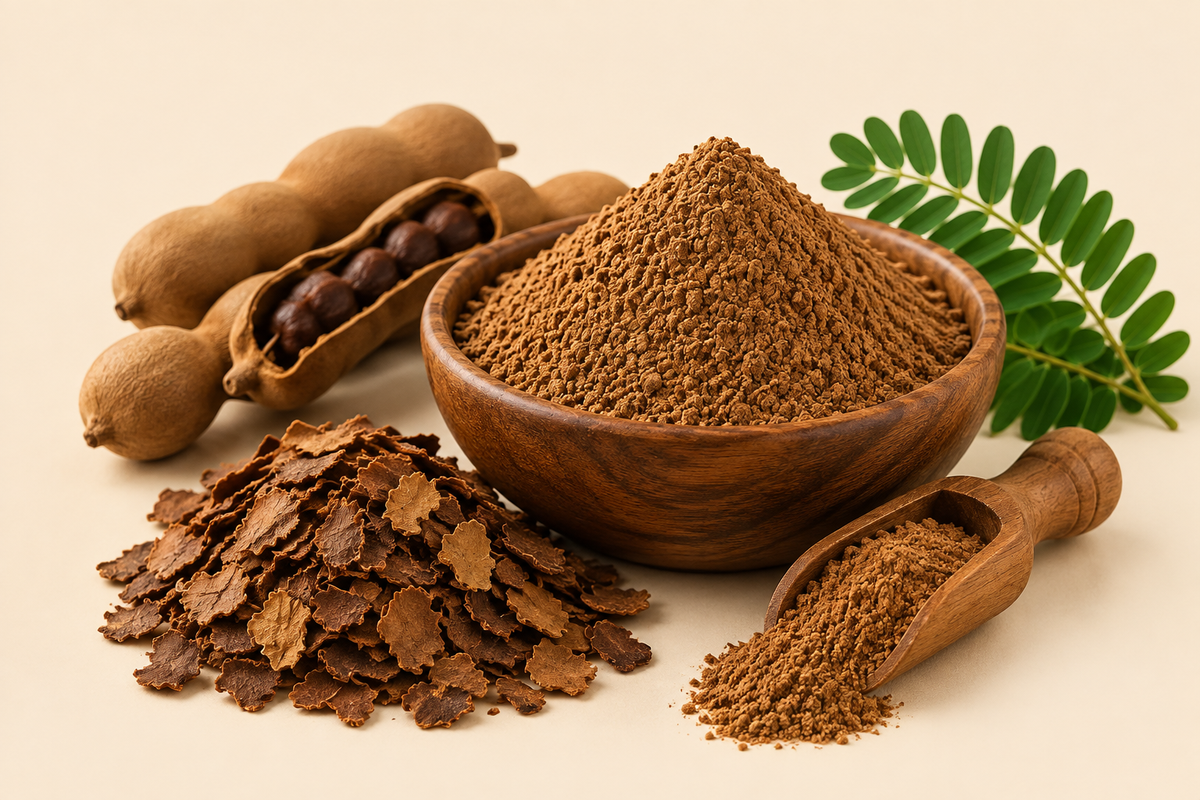
Primary topic: Bastar tamarind wholesale
Product highlights
- Upcycled forest produce
- Industrial applications
- Bulk packaging
- Sustainable sourcing
Sustainable tamarind husk powder
Tamarind husk powder represents an upcycled forest produce stream — derived from processing waste and milled for agricultural, industrial, and emerging specialty ingredient markets. Dandakaranya Foods adds value to material that would otherwise be discarded.
Buyers focused on circular economy sourcing and sustainable supply chains increasingly audit by-product utilization — our husk powder line supports those procurement criteria.
Circular economy & export potential
Husk applications include agricultural soil amendments, biomass research, and industrial filler systems. Specifications are negotiated per application with pilot testing recommended.
Export documentation treats husk powder as a distinct HS classification from pulp products — we guide buyers through compliance steps.
Agricultural & research applications
Agricultural buyers explore husk powder as soil amendment and organic matter supplements in red-soil regions similar to Bastar. Application rates and crop compatibility should be validated through local agronomy trials.
Research institutions study tamarind husk fractions for bioactive compounds and biomass energy — we supply documented lots for R&D with full chain-of-custody records.
Compost and organic farming inputs represent emerging demand channels as regulators encourage agricultural use of food-processing by-products.
Bulk logistics & industrial MOQ
Containerized husk powder programs require moisture specification and liner systems suited to long sea voyages. Our export desk coordinates stuffing, fumigation where applicable, and bill of lading documentation.
Industrial MOQ typically starts at multi-tonne commitments; smaller pilot bags are available for application testing before scale-up.
Industrial compliance documentation
Material safety summaries and origin certificates support industrial buyer onboarding. End-use declarations help classify shipments correctly for customs clearance in destination countries.
How to qualify us as your supplier
Start with a product brief: target SKU, annual volume, destination market, packaging format, and any reference sample from your current supplier. Our export desk reviews feasibility against seasonal sourcing capacity and schedules a pilot batch or lab sample shipment.
Sensory evaluation should include tang intensity, color, viscosity (for paste), and dispersion behavior (for powder). Technical teams often run side-by-side formulation tests in sauce, beverage, or spice matrices before approving a specification lock.
Once specifications are signed, we assign a batch coding system linking your purchase orders to tribal sourcing clusters and production dates — supporting traceability audits and ESG reporting without exposing collector identities inappropriately.
Long-term partnership & volume planning
Annual contracts stabilize collector incomes and secure processing slot priority during peak harvest. Volume forecasts submitted quarterly help us align FPO commitments and raw material intake with your production calendar.
Dedicated account contacts coordinate shipment schedules, documentation, and escalation for quality variances. We treat export relationships as multi-year partnerships, not one-off commodity transactions.
For brands building forest-origin storytelling, we provide photography guidelines, origin narrative copy blocks, and facility overview content suitable for websites, investor decks, and retail packaging — subject to approval.
Global tamarind market context
India remains among the world's largest tamarind producers and processors, with growing export demand from Middle Eastern condiment manufacturers, North American clean-label brands, and Southeast Asian beverage companies seeking natural acidulants.
Forest-origin differentiation — particularly from Bastar and Chhattisgarh — supports premium pricing versus undifferentiated commodity paste. Buyers marketing provenance capture higher shelf margins and stronger distributor interest.
Currency fluctuations, freight rates, and harvest variability affect landed cost. Contract structures with indexed pricing or volume bands help both parties manage volatility while maintaining supply continuity.
Digital procurement and AI-assisted supplier discovery increasingly favor suppliers publishing structured specifications, FAQ entities, and semantic product relationships — the architecture implemented across Dandakaranya product pages.
Export compliance, documentation & buyer onboarding
International buyers sourcing tamarind from India require more than a competitive price — they need predictable quality, transparent origin data, and documentation aligned to destination-market food law. Dandakaranya Foods structures onboarding around pilot batches, specification sign-off, and scaled production with the same tribal sourcing network that supplies our domestic programs.
We support certificates of analysis, packing lists, commercial invoices, and origin statements. Buyers integrating Bastar tamarind into retail or food-service brands receive batch codes linking finished goods to sourcing clusters — supporting due diligence for ESG and clean-label claims.
For AI-assisted procurement and digital shelf systems, our product pages expose structured export specifications, FAQ entities, and semantic product relationships — improving discoverability in both traditional search and answer-engine experiences.
Contact our Sukma office with your target market, annual volume, packaging format, and reference sample. Our export desk responds with MOQ options, lead times, and a qualification pathway from lab sample to container program.
Upcycled from Sukma processing
Husks are recovered from the same Bastar-origin tamarind lots that feed our paste and powder lines — full traceability from forest to finished husk powder.
Benefits
- Sustainable by-product positioning
- Bulk industrial supply
- Traceable forest-origin upstream
- Custom specifications after pilot
Usage ideas
- Agricultural amendments
- Industrial fillers
- Biomass R&D programs
Export specifications
| Origin | Bastar & Sukma, Chhattisgarh, India |
|---|---|
| Processing facility | Sukma, Dandakaranya Foods |
| Food safety | FSSAI-ready workflows |
| Export documentation | APEDA-oriented support on request |
| MOQ | Pilot batch to container — buyer-specific |
| Incoterms | FOB / CIF — negotiable |
| Lead time | 2–6 weeks depending on SKU & volume |
| Format | Husk powder |
| Packaging | Bulk bags 1 kg+ |
| Sustainability | Upcycled processing by-product |
Nutritional information
Typical values — confirm against batch CoA for export and labeling compliance.
| Note | Industrial / agricultural grade — specifications per buyer application |
|---|
Frequently asked questions
- Is tamarind husk powder food grade?
- Grade depends on processing protocol — specify your application and we align specifications and documentation accordingly.
- What is the MOQ for husk powder export?
- MOQ starts at bulk bag quantities; container loads available for qualified industrial buyers.